
Модуль 7. Reading B1: стратегии чтения и понимания · урок 35
Lesson 35. Paraphrase and inference in B1 reading
Объяснение темы
Understand same meaning in different words and make careful conclusions based on text evidence.
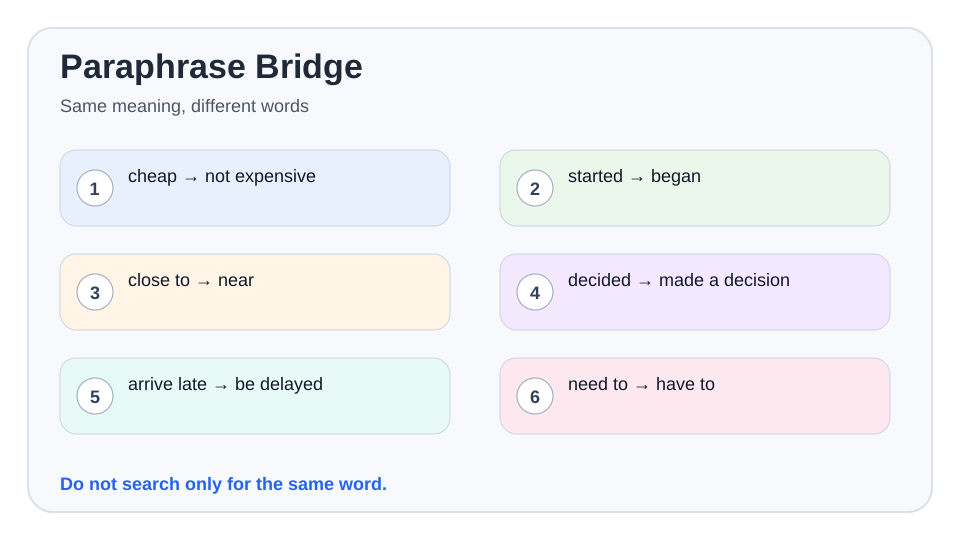 Same meaning, different words
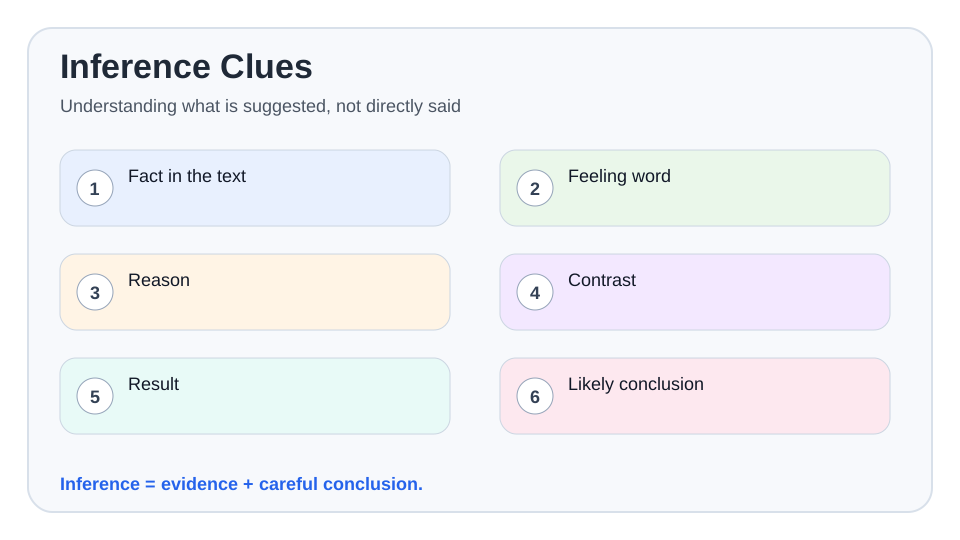 Understanding what is suggested, not directly said
Главная идея урока
На B1 ответы часто не копируют слова из текста. Тебе нужно узнавать paraphrase — ту же мысль другими словами.
Безопасный алгоритм inference
- Найди факт в тексте.
- Найди clue: эмоция, причина, результат, контраст.
- Сделай осторожный вывод.
- Проверь: текст действительно поддерживает этот вывод?
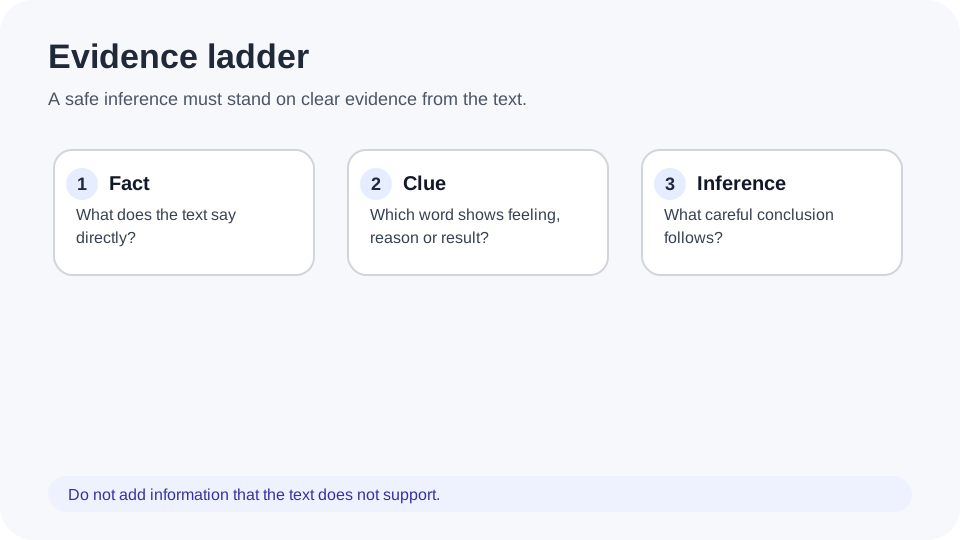 A ladder for making safe inferences from facts and clues.
Extra reading checkpoint
For inference questions, use an evidence ladder: fact → clue → careful conclusion. The answer should be supported by the text, not by your personal imagination.
Weak spot fixed: too strong conclusions
Words like always, never, hates, loves can make an answer too strong if the text does not clearly support them.
Примеры
Example 1: paraphrase
Text: “The tickets are sold out.”
Answer: “There are no tickets left.”
Example 2: inference
Text: “Mila packed an umbrella after looking at the sky.”
Careful inference: She thought it might rain.
Mini-dialogue
A: The answer uses different words. Is it wrong?
B: Not necessarily. Check if the meaning is the same.
Example: safe inference
Text: “Tom looked at the dark clouds and took an umbrella.”
Fact: Tom saw dark clouds and took an umbrella.
Safe inference: He thought it might rain.
Too strong: Tom hates rain.
Проверка темы
Решите задания и отправьте ответы на проверку.
Чтобы платформа сохранила результат, войдите или зарегистрируйтесь.
Войти Зарегистрироваться